


Guniting
Guniting, also known as shotcrete, is an advanced concrete application method where a cement-sand mortar or concrete mix is pneumatically projected at high velocity onto prepared surfaces. This process creates a dense, durable, and strongly bonded protective layer, making it ideal for repair, strengthening, and stabilization works in modern construction projects.
Widely used in structural rehabilitation and geotechnical engineering, guniting is highly effective for retaining walls, tunnels, slopes, bridges, water tanks, basements, and damaged concrete structures. Its spray application allows excellent adhesion even on vertical, overhead, or irregular surfaces where conventional concreting may be difficult.
At HPR Group, we deliver professional guniting solutions using advanced machinery, skilled technicians, and quality-controlled materials to ensure long-lasting performance, structural integrity, and superior surface finish.
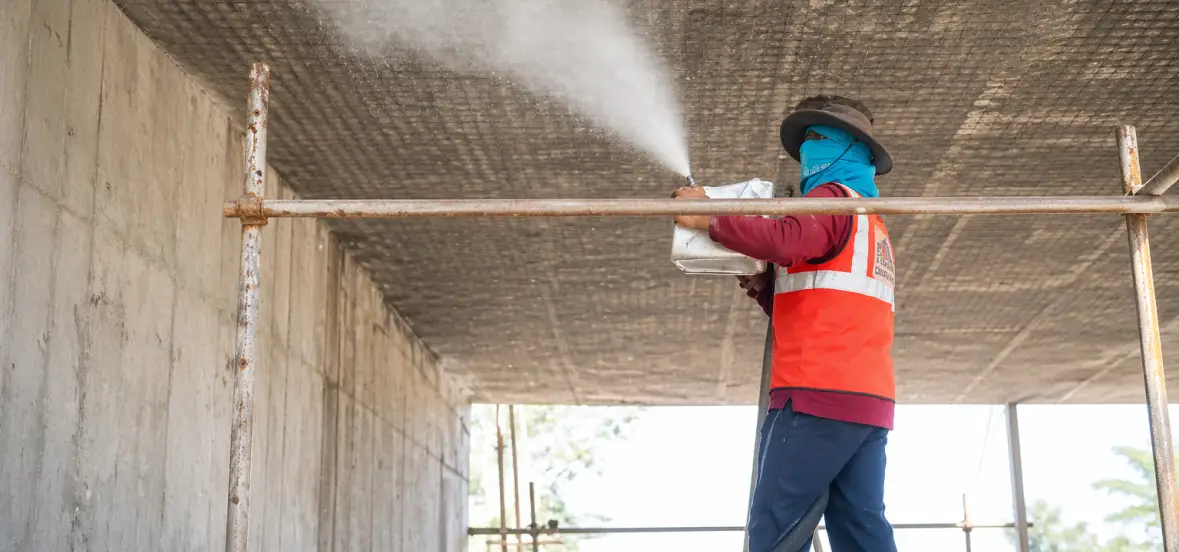
Equipments
Cement Gun (Hopper)
Used to hold and feed the cement mortar or concrete mix continuously into the spraying system.
Air Compressor
Provides high-pressure air required to propel the material through the hose and nozzle.
Water Supply Tank
Supplies controlled water flow to maintain the correct mix consistency during application.
Spray Nozzle
Directs the material onto the surface with proper pressure for strong bonding and uniform coverage.
Procedure — Step by Step
- Surface preparation: The surface is cleaned thoroughly by removing loose particles, dust, rust, oil, and deteriorated concrete.
- Reinforcement Fixing: Where required, steel mesh or reinforcement bars are installed to enhance structural strength.
- Mix Preparation: The specified dry or wet mix design is prepared using quality cement, aggregates, and admixtures.
- Spraying Application: The material is sprayed through the nozzle at controlled pressure to achieve proper compaction and bonding.
- Layer Build-Up: Multiple layers are applied where necessary to obtain the required thickness and finish.
- Finishing & Curing: The completed surface is finished smoothly and cured properly to achieve maximum strength and durability.
Shotcreting
Shotcreting is an advanced concrete application technique in which concrete or mortar is pneumatically projected at high velocity onto prepared surfaces. This method creates a dense, strong, and durable layer with excellent bonding properties, making it ideal for structural repairs, reinforcement, and surface stabilization in modern construction projects.
Widely used in tunnels, retaining walls, slopes, swimming pools, basements, bridges, water tanks, and damaged concrete structures, shotcreting is highly effective for vertical, overhead, and irregular surfaces where conventional concreting methods may be challenging.
At HPR Group, we provide professional shotcreting solutions using modern equipment, skilled technicians, and high-quality materials to ensure superior strength, durability, and long-term structural performance.
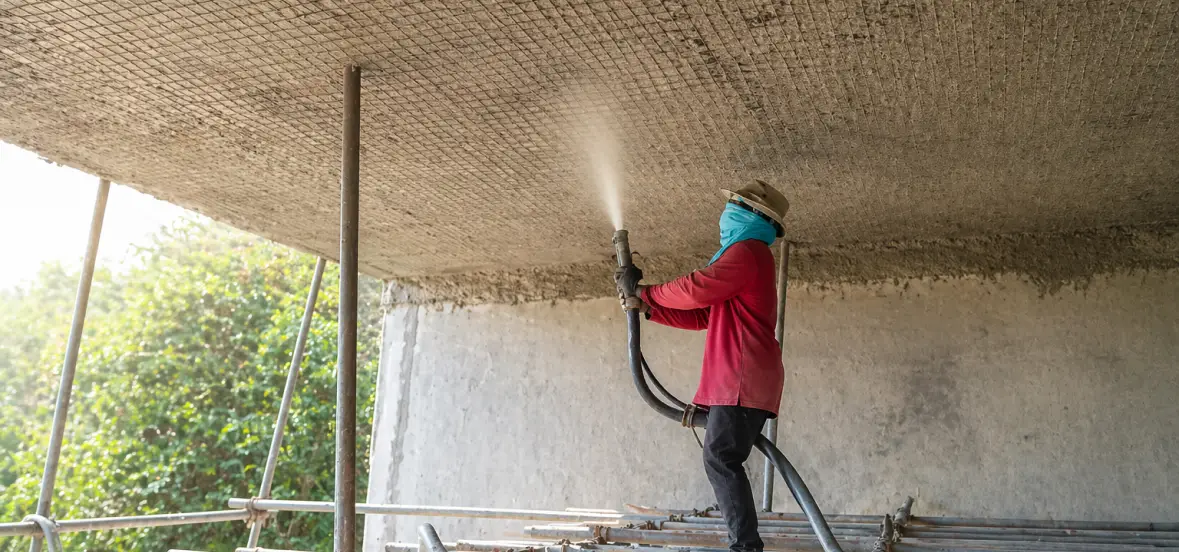
Equipments
Shotcrete Machine
Used to feed the concrete or mortar mix continuously into the spraying system.
Air Compressor
Provides high-pressure air to project the material through the hose and nozzle.
Water Supply System
Supplies controlled water flow to achieve the required consistency during application.
Delivery Hose Pipes
Transfers the mix from the machine to the nozzle efficiently and safely.
Procedure — Step by Step
- Surface preparation: TThe surface is cleaned thoroughly by removing dust, loose particles, rust, oil, and damaged concrete.
- Reinforcement Fixing: Steel mesh or reinforcement bars are installed wherever additional strength is required.
- Mix Preparation: The specified dry mix or wet mix is prepared using quality materials and approved proportions.
- Spraying Application: The material is sprayed under controlled pressure to ensure proper compaction and bonding.
- Layer Build-Up: Multiple layers are applied if required to achieve the desired thickness and finish.
- Finishing & Curing: The completed surface is finished properly and cured to achieve maximum strength and durability.
Soil Nailing
Soil nailing is an effective ground stabilization technique used to reinforce and strengthen existing soil slopes, excavations, and retaining structures. The process involves installing closely spaced steel bars (soil nails) into the ground and grouting them in place to create a stable mass that improves the overall strength and safety of the soil.
Widely used in deep excavations, retaining walls, highway cuttings, tunnel portals, slope protection, and foundation support works, soil nailing is a cost-effective and efficient solution for preventing soil movement and collapse in challenging construction conditions.
At HPR Group, we provide professional soil nailing solutions using advanced equipment, skilled engineers, and quality materials to ensure long-lasting stability, structural safety, and reliable project performance.
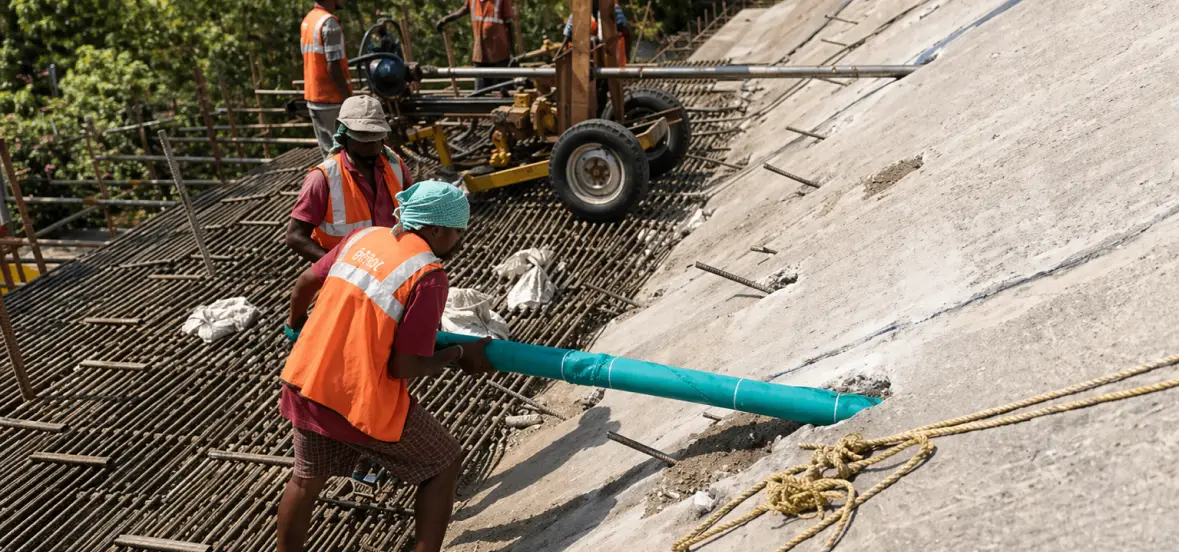
Equipments
Drilling Machine
Used to drill holes into the soil for installing steel nails.
Steel Bars
High-strength steel bars inserted into drilled holes to reinforce the soil mass.
Grouting Pump
Used to inject cement grout around the steel bars for bonding and protection.
Air Compressor
Provides power support for drilling and cleaning drilled holes.
Procedure — Step by Step
- Site Survey: The area is inspected and nail positions are marked as per engineering design.
- Drilling Holes: Required depth and diameter holes are drilled into the soil or rock face.
- Nail Installation: Steel bars are inserted into the drilled holes in the specified alignment.
- Grouting Work: Cement grout is injected to secure the nails and improve bonding strength.
- Facing Application: Shotcrete or concrete facing is applied to the exposed surface for protection and stability.
- Testing & Finishing: Load testing, inspection, and finishing works are completed to ensure safety and performance.
Soil Stabilization
Soil stabilization is a ground improvement process used to enhance the strength, durability, and load-bearing capacity of weak or unstable soil. The method involves treating the soil with suitable materials such as cement, lime, chemicals, or mechanical compaction to create a stronger and more stable foundation for construction projects.
Widely used in roads, highways, building foundations, industrial yards, embankments, pavements, and infrastructure developments, soil stabilization helps control settlement, reduce moisture sensitivity, and improve the overall performance of the ground.
At HPR Group, we provide professional soil stabilization solutions using modern equipment, experienced technicians, and quality materials to ensure safe, durable, and long-lasting ground support for all types of projects.
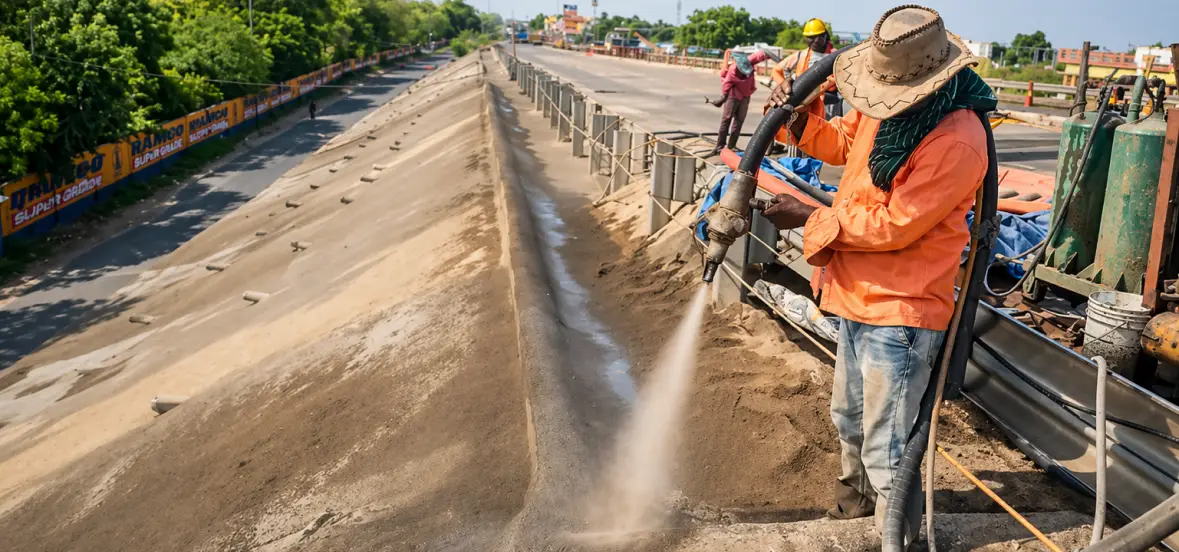
Equipments
Excavator
Used for soil excavation, leveling, and site preparation works.
Soil Mixer
Used to blend stabilizing materials evenly with the existing soil.
Water Supply Tank
Supplies controlled water for proper moisture content during mixing.
Road Roller
Used to compact the treated soil for maximum density and strength.
Procedure — Step by Step
- Site Inspection: The soil condition is analyzed to determine the suitable stabilization method.
- Surface Preparation: The area is cleared, leveled, and prepared for treatment work.
- Material Application: Cement, lime, or other stabilizing agents are spread over the soil surface.
- Mixing Process: The soil and stabilizing materials are mixed thoroughly for uniform bonding.
- Compaction Work: The treated soil is compacted using rollers to achieve required density.
- Finishing & Curing: The stabilized surface is cured properly and finished for long-term durability.
Pressure Grouting
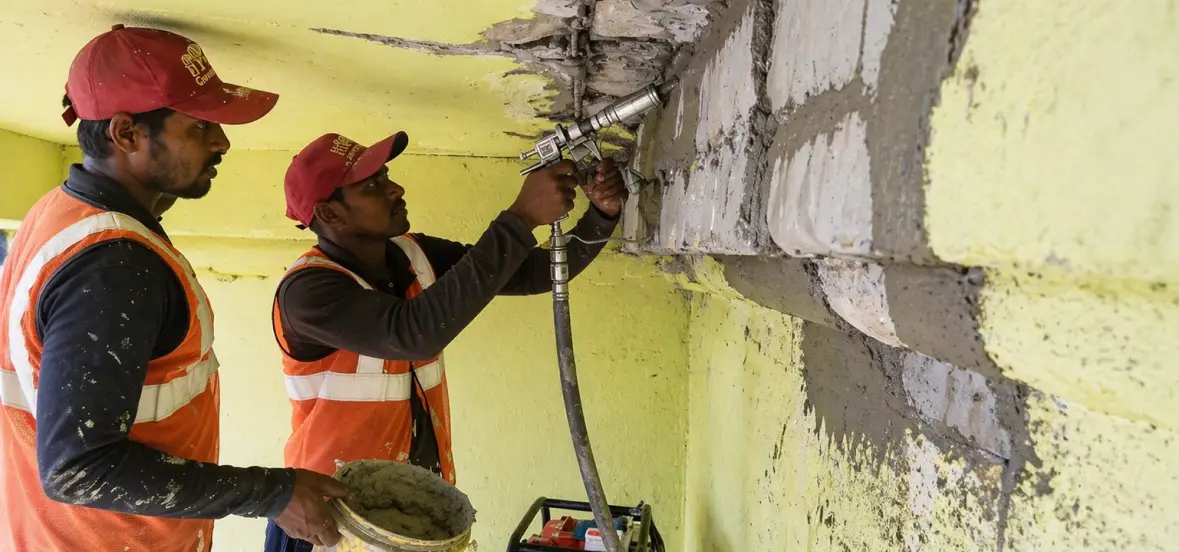
Pressure grouting is a specialized ground improvement and repair technique used to fill voids, strengthen weak soil, and seal cracks or gaps in structures by injecting cementitious or chemical grout under controlled pressure. This process improves stability, reduces water seepage, and enhances the load-bearing capacity of soil and foundations.
Widely used in foundations, basements, tunnels, retaining walls, dams, bridges, slabs, and underground structures, pressure grouting is an effective solution for repairing defects, stabilizing loose ground, and preventing settlement or leakage in construction projects.
At HPR Group, we provide professional pressure grouting solutions using advanced equipment, skilled technicians, and quality materials to ensure durable strengthening, structural safety, and long-term performance.
Equipments
Grouting Pump
Used to inject grout material under controlled pressure into soil or structural gaps.
Mixer Unit
Used to prepare a uniform grout mix with proper consistency.
Drilling Machine
Used to create holes for grout injection where required.
Injection Packers
Used to direct grout into cracks, joints, or drilled holes accurately.
Procedure — Step by Step
- Site Inspection: The area is examined to identify voids, cracks, leakage points, or weak zones.
- Drilling: Required holes or access points are created for grout injection.
- Grout Mix Preparation: Cementitious or chemical grout is mixed to the specified design consistency.
- Injection Process: Grout is pumped under controlled pressure into the target area until proper filling is achieved.
- Monitoring & Sealing: Pressure, flow, and filling progress are monitored, then openings are sealed after completion.
- Finishing & Testing: The treated area is inspected and tested to ensure strength, stability, and performance.
Epoxy Treatment
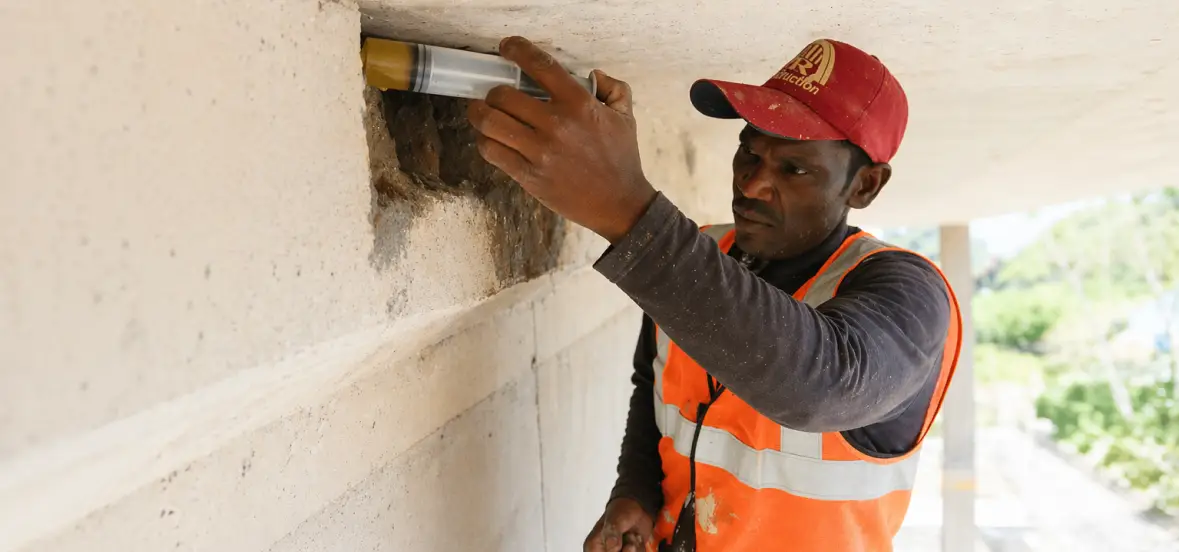
Epoxy treatment is a specialized repair and protection method used to seal cracks, restore strength, and improve the durability of concrete and structural surfaces. The process involves applying or injecting high-performance epoxy resin into damaged areas to create strong bonding, waterproofing, and long-lasting structural integrity.
Widely used in buildings, bridges, columns, beams, slabs, basements, industrial floors, and water-retaining structures, epoxy treatment is an effective solution for repairing cracks, surface damage, and weakened concrete in construction projects.
At HPR Group, we provide professional epoxy treatment solutions using premium materials, modern equipment, and skilled technicians to ensure reliable repairs, superior bonding, and long-term structural performance.
Equipments
Epoxy Injection Pump
Used to inject epoxy resin into cracks under controlled pressure.
Mixing Unit
Used to mix epoxy resin and hardener in proper proportions.
Injection Packers
Used to guide epoxy material into cracks accurately.
Grinding
Used to clean and prepare surfaces before treatment.
Procedure — Step by Step
- Surface Inspection: The damaged area is examined to identify cracks and repair requirements.
- Surface Preparation: Dust, loose particles, oil, and contaminants are removed thoroughly.
- Packer Installation: Injection ports are fixed along the crack line where required.
- Epoxy Mixing: Resin and hardener are mixed to the specified ratio for proper performance.
- Injection: Epoxy is injected into cracks or applied on surfaces for sealing and bonding.
- Finishing & Curing: After curing, ports are removed, surfaces are finished, and final inspection is completed.
Micro Treatment
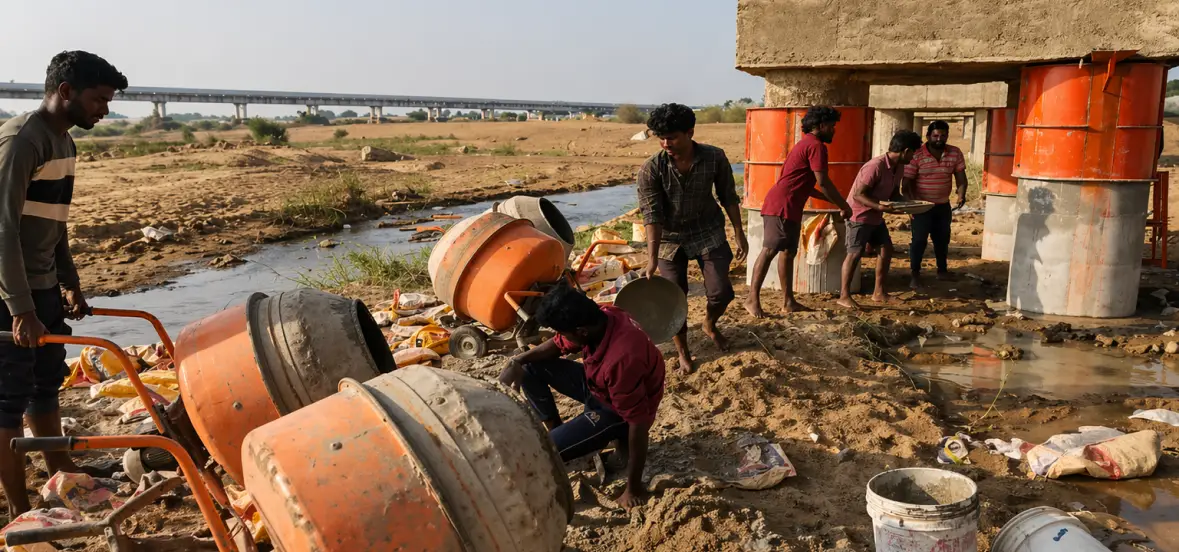
Micro treatment, or micro-concreting, is a specialized repair and strengthening technique used for structural rehabilitation where traditional concrete application is difficult. It involves the use of high-performance, non-shrink, and high-flow cementitious materials to restore the structural integrity of columns, beams, and slabs.
This method is particularly effective for repairing damaged concrete sections, honeycombing, and reinforcing structures in congested areas. Its exceptional flow properties allow it to penetrate narrow gaps and densely packed reinforcement, ensuring a solid, void-free bond with the existing substrate.
At HPR Group, we specialize in professional micro treatment solutions using premium-grade materials and precision formwork techniques to ensure long-lasting durability, high structural strength, and reliable performance.
Equipments
Mechanical Mixer
Used to achieve a uniform, lump-free consistency of the micro-concrete mix.
Grouting Pump
Used for controlled injection of micro-concrete into formwork or tight spaces.
Water-Tight Shuttering
Precision formwork to prevent leakage and ensure proper shaping of the repair area.
Surface Prep Tools
Chipping hammers and wire brushes used to prepare the existing concrete surface.
Procedure — Step by Step
- Surface Preparation: Loose and damaged concrete is removed, and the surface is cleaned to ensure proper bonding.
- Reinforcement Treatment: Exposed rebars are cleaned and treated with anti-corrosion coatings if necessary.
- Formwork Installation: Water-tight and rigid shuttering is fixed around the area to be treated.
- Pre-Wetting: The substrate is saturated with water to prevent the dry concrete from absorbing moisture from the mix.
- Mixing & Pouring: Micro-concrete is mixed to a flowable consistency and poured or pumped into the shuttering.
- Curing: After initial setting, the formwork is removed, and the area is cured with water for specified duration.
Water Proofing
Waterproofing is a critical construction process designed to prevent water ingress into structural elements, ensuring the longevity and durability of the building. It involves applying specialized protective layers to surfaces like roofs, basements, foundations, and wet areas to block moisture and prevent structural damage, mold, and corrosion.
Effective waterproofing not only protects the structural integrity of the property but also enhances the living environment by maintaining a dry and healthy space. Whether it's membrane application or liquid-applied coatings, the right solution ensures long-term resistance to weathering and water pressure.
At HPR Group, we provide comprehensive waterproofing solutions using high-quality bituminous, cementitious, and polyurethane-based materials, applied with precision to guarantee a leak-proof and secure structure.
Equipments
Pressure Spray Pump
Used for uniform application of liquid waterproofing membranes over large surface areas.
Heating Torch
Essential for the installation of bituminous torch-on membranes for roofs and basements.
Moisture Meter
Used to check the moisture content of the substrate before applying any waterproofing layer.
Mixing Paddle
Used to thoroughly mix cementitious or multi-component waterproofing materials.
Procedure — Step by Step
- Surface Preparation: The surface is cleaned of dust, debris, and oil, and any cracks are repaired using specialized sealants.
- Primer Application: A suitable primer is applied to ensure maximum adhesion between the substrate and the waterproofing layer.
- Corner Reinforcement: Critical areas like corners, joints, and pipe penetrations are reinforced with mesh or tape.
- Main Application: The waterproofing membrane or coating is applied in multiple coats as per manufacturer specifications.
- Flood Testing: The treated area is filled with water for a specified period to test for any leaks or weak points.
- Protection Layer: Once testing is successful, a protection board or screed is applied to safeguard the membrane.
Expansion Joints
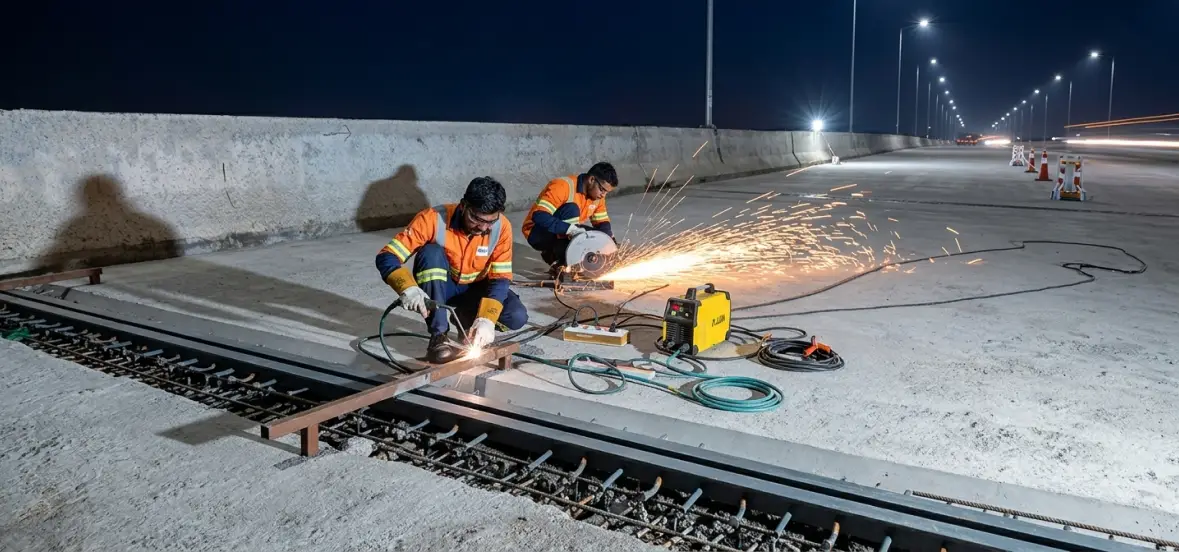
Expansion joints are vital components in modern construction designed to safely accommodate the thermal expansion and contraction of building materials. They allow for movement caused by temperature changes, ground settlement, and seismic activity, preventing the formation of cracks and maintaining structural stability.
Used extensively in bridges, buildings, highways, and industrial facilities, expansion joints ensure that different sections of a structure can move independently without causing stress or damage. A properly installed and maintained joint system is essential for the long-term health of any infrastructure.
At HPR Group, we specialize in the installation and repair of various types of expansion joints, including compression seals, strip seals, and modular joints, using advanced technology and high-performance materials.
Equipments
Joint Cutting Machine
Used to create precise gaps and clean existing joints before installing the seal system.
Industrial Vacuum
Used to thoroughly clean debris and dust from the joint gap to ensure a perfect bond.
Sealant Dispenser
High-pressure equipment used to inject specialized sealants or adhesives into the joint.
Pneumatic Hammer
Used for chipping and preparing the concrete edges around the expansion joint area.
Procedure — Step by Step
- Joint Assessment: The condition of the existing joint is inspected to determine the extent of repair or replacement needed.
- Cleaning & Preparation: The joint gap is cleaned using mechanical cutting, grinding, and vacuuming to remove all contaminants.
- Backer Rod Installation: A high-density foam backer rod is inserted into the gap to control the depth of the sealant.
- Priming: A specialized primer is applied to the joint faces to enhance the bonding of the seal material.
- Sealant/System Installation: The expansion joint seal or modular system is installed and secured as per design requirements.
- Finishing: The joint surface is leveled and finished to ensure a smooth transition for traffic or pedestrians.
Replacement of bridge bearings
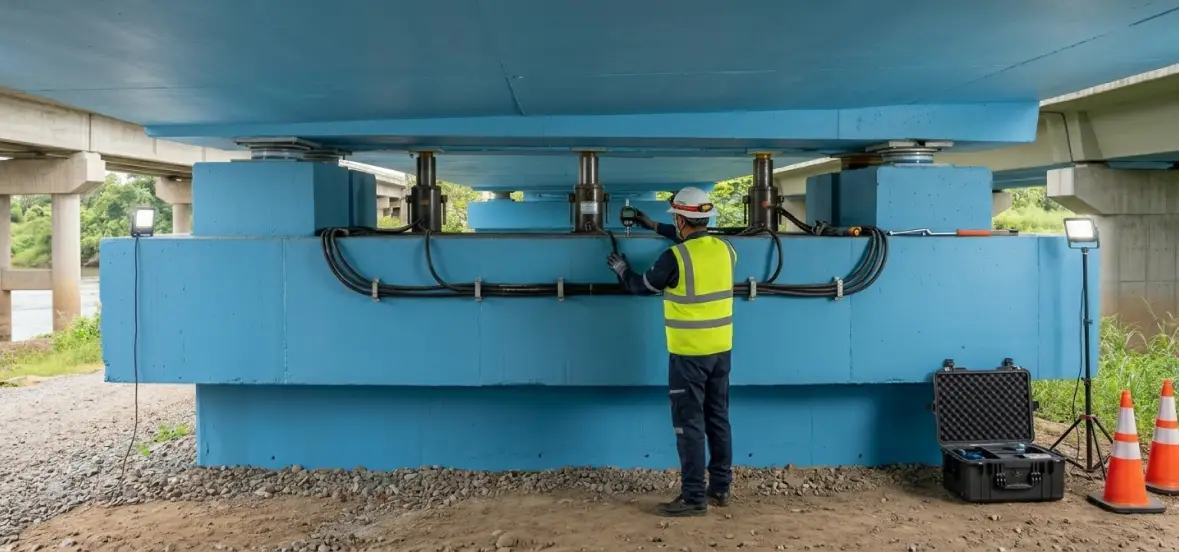
Bridge bearings are critical structural components that facilitate the transfer of loads from the bridge deck to the piers or abutments. They allow for necessary movements such as rotation and thermal expansion. Over time, these bearings can deteriorate due to wear, corrosion, or excessive loads, necessitating their professional replacement.
Replacing bridge bearings is a complex engineering task that requires precise jacking of the bridge superstructure while maintaining structural stability. Modern elastomeric, pot, or spherical bearings are used to restore the bridge's functionality and ensure the safety of the entire transport network.
At HPR Group, we provide expert bridge bearing replacement services using specialized hydraulic systems and monitoring equipment, ensuring minimal disruption to traffic and maximum structural safety.
Equipments
Hydraulic Jacking System
Precision high-capacity jacks used to lift the bridge deck safely for bearing access.
Electronic Dial Gauges
Used to monitor the lifting process with sub-millimeter accuracy to prevent structural stress.
Torque Wrench
Calibrated tools used to secure the new bearing bolts to the specified tension.
Temporary Supports
Steel cribbing or temporary pedestals used to hold the load during the replacement process.
Procedure — Step by Step
- Structural Assessment: A thorough inspection of the bridge and current bearings is performed to design the jacking plan.
- Setting Up Jacks: Hydraulic jacks are positioned at pre-calculated points to ensure balanced lifting of the superstructure.
- Lifting (Jacking): The bridge deck is slowly raised by a few millimeters, constantly monitored by electronic gauges.
- Bearing Removal: The old, worn-out bearings are removed, and the bearing seats are cleaned and repaired.
- New Installation: The new bearings are precisely positioned, leveled, and anchored to the substructure.
- Lowering & Testing: The bridge is slowly lowered onto the new bearings, and the load distribution is verified.
PMC Mortar & FRP Wrapping
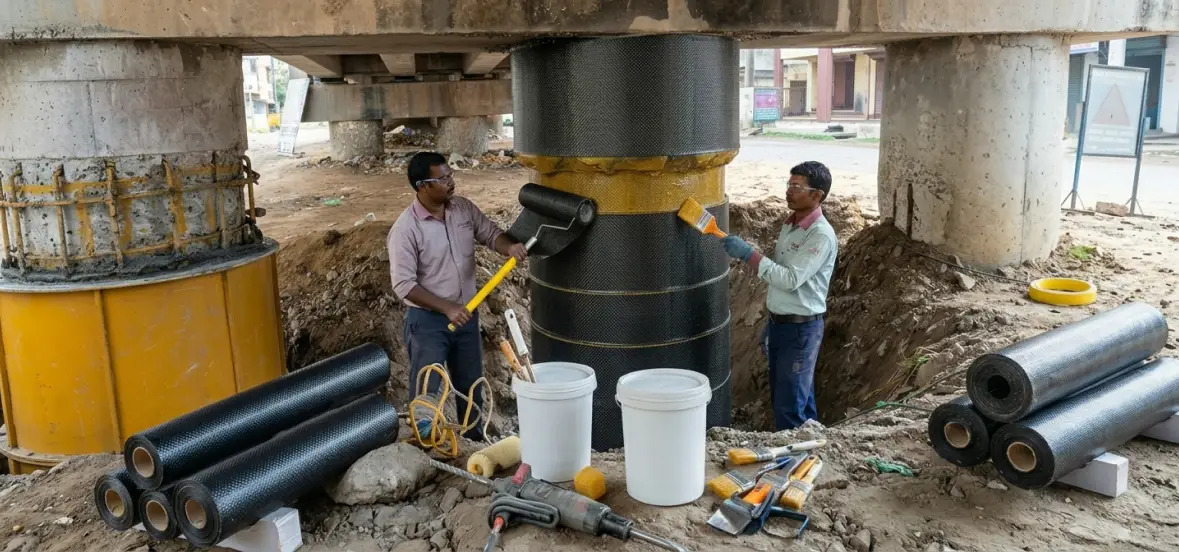
Polymer Modified Cement (PMC) Mortar and Fiber Reinforced Polymer (FRP) Wrapping are advanced techniques for structural repair and strengthening. PMC Mortar combines cement with high-performance polymers to create a durable, non-shrink repair material with superior bonding, while FRP Wrapping (Carbon or Glass Fiber) is used to significantly enhance the load-carrying capacity of existing columns, beams, and slabs.
These methods are ideal for seismic retrofitting, structural upgrades, and repairing corrosion-damaged elements. FRP sheets are lightweight, high-strength, and corrosion-resistant, providing an efficient alternative to traditional steel jacketing or concrete enlargement.
At HPR Group, we specialize in high-performance structural strengthening using premium PMC and FRP systems, applied with technical expertise to extend the life and safety of critical infrastructure.
Equipments
Surface Grinder
Used to prepare the concrete surface by removing laitance and achieving the required roughness.
Saturation Roller
Specially designed rollers used to thoroughly impregnate the FRP sheets with epoxy resin.
PMC Mixing Unit
High-shear mixer used to ensure the uniform distribution of polymers within the cement mortar.
Laser Level
Used to ensure precise alignment and positioning of FRP wraps on columns and beams.
Procedure — Step by Step
- Surface Preparation: The concrete surface is ground or sandblasted to expose the aggregate and cleaned of all dust.
- Crack Repair: Any existing structural cracks are injected with epoxy or repaired with PMC mortar.
- Primer Application: An epoxy primer is applied to the prepared surface to seal the pores and enhance bonding.
- FRP Saturation: Carbon or glass fiber sheets are saturated with high-strength epoxy resin using saturation tools.
- Wrapping/Application: The saturated sheets are wrapped around the structural element and smoothed to remove air voids.
- Protective Coating: A final UV-resistant or fire-retardant coating is applied to protect the FRP system from environmental damage.